How non-destructive testing, pile integrity checks and remodelling told Karwar Port what its ageing jetty could still carry.
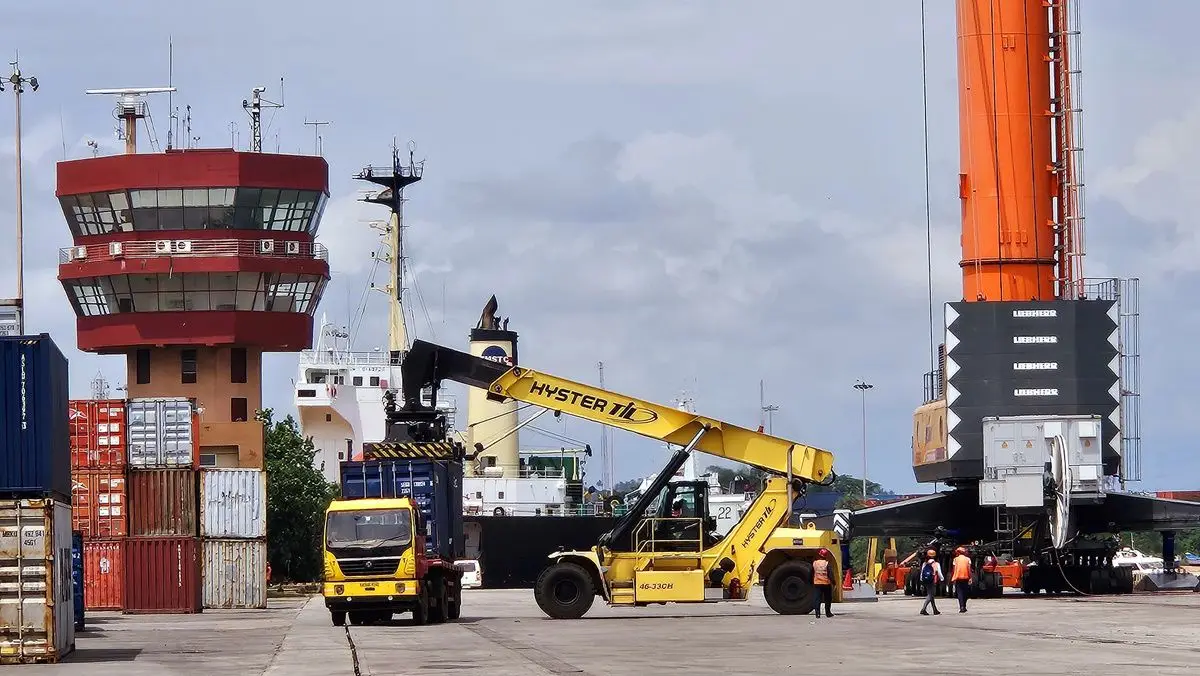
Karwar Port in Uttara Kannada asked a simple question with an expensive answer: could a jetty built around forty years ago take container loads, and if not, what would it take to get there? Replacing a marine structure is slow and costly, so a reliable assessment of the existing one comes first.
What we tested
Our team ran a full non-destructive testing programme on the deck, beams and piles, using our own field equipment:
- Rebound hammer and ultrasonic pulse velocity (UPV) tests to map concrete quality
- Cover meter surveys to check reinforcement cover in the splash and tidal zones
- Core cutting to confirm in-situ concrete strength
- Pile integrity tests and underwater inspection of the substructure
From test results to a structural model
Test results fed a remodelled structural analysis of the jetty under present-day container loading. That let us separate members with adequate reserve from those that need intervention, rather than treating the whole structure as suspect.
What the port received
- An estimate of the remaining service life of the jetty
- A restrengthening scheme for the members that need it
- Cost estimates for the recommended works
Many Indian ports operate marine structures that have outlived their original design assumptions. A structured assessment — testing, modelling, then targeted restrengthening — usually costs a fraction of replacement and keeps berths in service.